
We classify our green coffees into the following categories:

Regional & Commercial Lot
Regional Lots are from a certain region (city/state) and there would not be traceability of the farms where those green coffees were produced. They can be coffees of the same or different varietal and were mixed at a cooperative where farmers store their coffee. If you are looking for the greatest cost-benefit, you should try a regional lot, these coffees’ profiles are very uniform, they have balanced acidity and body, and are usually very suitable for blends.
Single Origin
Regional Lots are from a certain region (city/state) and there would not be traceability of the farms where those green coffees were produced. They can be coffees of the same or different varietal and were mixed at a cooperative where farmers store their coffee. If you are looking for the greatest cost-benefit, you should try a regional lot, these coffees’ profiles are very uniform, they have balanced acidity and body, and are usually very suitable for blends.
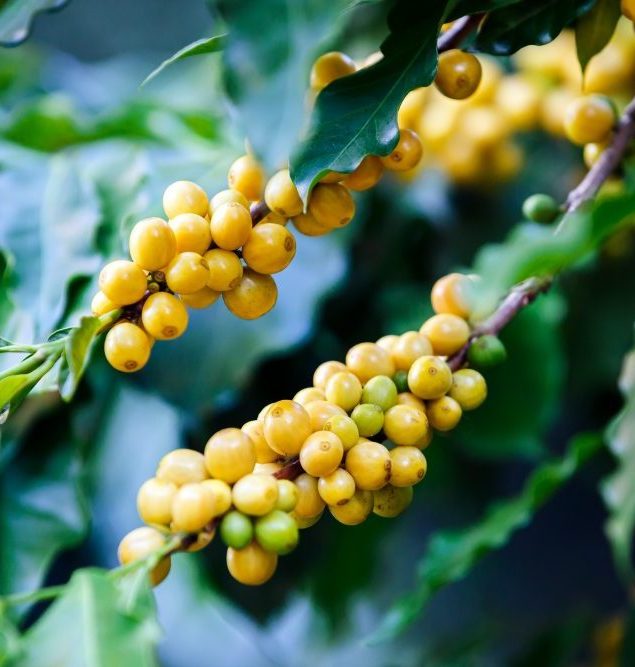
Specialty & Micro Lot
Specialty Coffees are generally available in smaller amounts, around 30/60 bags. These coffees come from smaller farms or from a small specialty plot of a big farm, which the producers gave special treatments/processes and added more expensive investments in order to get better results. Those farmers have a love for quality. These coffees tend to be more expensive to the whole chain once it requires more work and more people involved in each step. These magnificent green coffees are for those who are seeking more nuanced coffees with striking flavors and aromas.
Micro Lots are specialty coffees offered at a maximum of 20 bags (30 kg each) they are hand-picked, and they tend to be more expensive because the farmers had to hire extra manpower for picking. But they do not necessarily have a higher cupping score than a non-micro lot specialty coffee, because the quality depends on the soil conditions, weather, altitude, and correct management of the after-harvest drying process.
Chart 1.
| Intrinsic Defect | Number of occurrences | Number of Defects |
| Black bean | 1 | 1 |
| Sour(Including stinker beans) | 1 | 1 |
| Shells | 3 | 1 |
| Green | 5 | 1 |
| Broken | 5 | 1 |
| Insect Damage | 5 | 1 |
| Mal-formed | 5 | 1 |
| Dried Cherry | 1 | 1 |
| Floater | 2 | 1 |
| Large Rock or Stick | 1 | 5 |
| Medium Rock or Stick | 1 | 2 |
| Small Rock or Stick | 1 | 1 |
| Large Skin or husk | 1 | 1 |
| Medium Skin or husk | 3 | 1 |
| Small Skin or husk | 5 | 1 |
Chart 2.
| Type Number | Maximum Allowable number of defects per 300 g sample |
| NY 2 | 6 |
| NY 2/3 | 9 |
| NY 3 | 13 |
| NY 3/4 | 21 |
| NY 4 | 30 |
| NY 4/5 | 45 |
| NY 5 | 60 |
| NY 5/6 | 90 |
| NY 6 | 120 |
| NY 6/7 | 180 |
| NY 7 | 240 |
| NY 8 | 450 |
Do you know Brazil / New York method for green coffee classification?
For this classification 300 grams of coffee is checked. The number of coffee beans equivalent to 1 defect is given in Chart 1. For example, a set of 5 broken beans counts as 1 defect. On the other hand, 1 large rock counts as 5 defects. After counting all defects the coffee is classified according to Chart 2.